In this article · 9 sections
It can start with a friendly message from someone who seems to be your teen’s age. In some cases the blackmail has followed within an hour. This guide covers how sextortion works, the warning signs in the chat and at home, exactly what to do in the first hour, and how to talk to your teen without blame. It deals with a hard subject, so we keep the detail to what you need to act.
The basicsWhat is sextortion?
Sextortion is a form of blackmail. Someone gets, or claims to have, an intimate image of a young person and threatens to share it unless the young person sends more images or pays. The National Center for Missing & Exploited Children (NCMEC) says it can happen after a child shares an image with someone they trust, but in many cases the child is targeted by someone they met online, who gets the image through deceit or pressure, often using a fake account.
There are two common patterns:
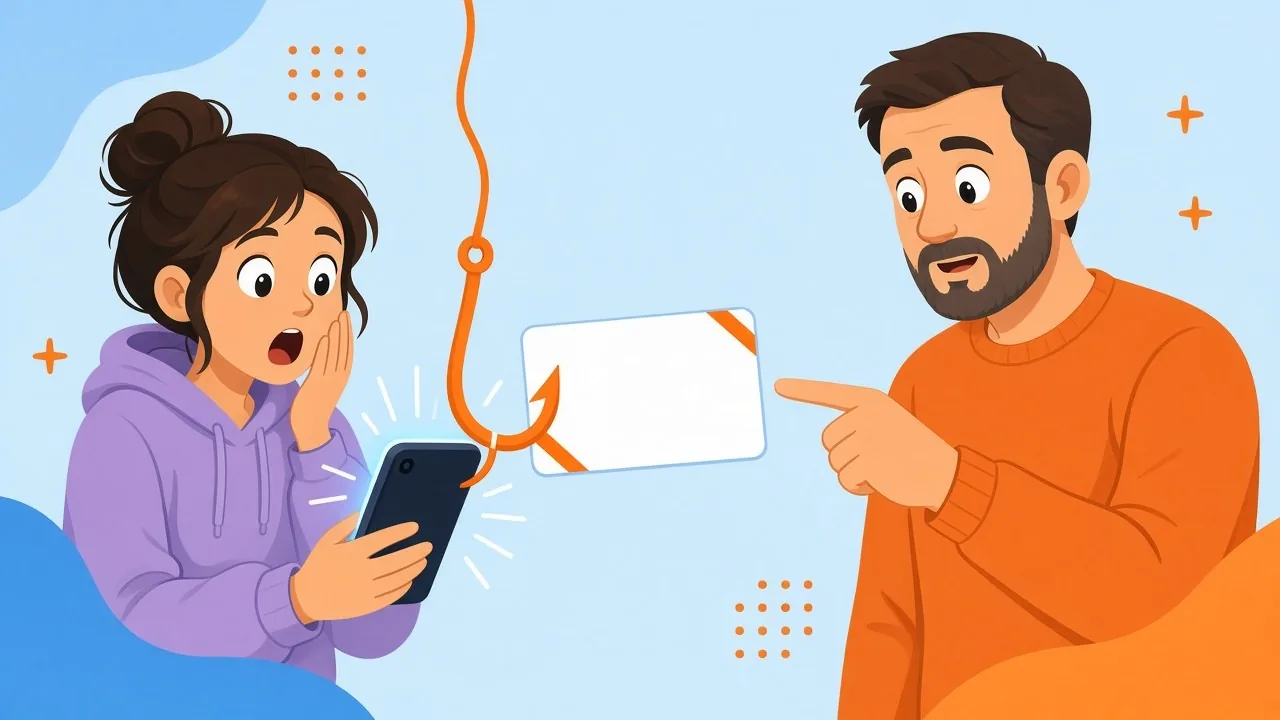
- Financial sextortion. The offender asks for money or gift cards. The FBI has seen an increase in these cases. Teen boys are the most common targets.
- Image or contact demands. The offender wants more images or videos, or some other contact, and uses the threat of sharing to keep the pressure on.
It is not rare. NCMEC received more than 50,000 reports of financial sextortion in 2025, about 137 a day, up from more than 36,000 in 2024. It also reported more than 80,000 sextortion-related reports overall in 2025.
The patternHow fast it can happen
Offenders count on speed and embarrassment. The UK’s National Crime Agency says that in some cases offenders have gone from first contact to blackmail in under an hour. NCMEC describes the tactics:
- They approach a teen on social media, often after reading the profile to learn interests, friends and school.
- They move fast and ask for intimate photos almost immediately.
- They pose as a peer, sometimes of the opposite sex, and use reciprocation (“I’ll show you if you show me”), fake modelling offers or a quick friendship or romance.
- They move the chat to a private or encrypted messaging app. NCMEC says offenders are moving conversations to private messaging more quickly.
- They may threaten to create fake sexual images with editing tools, so even a teen who shared nothing can be targeted.
The FBI adds that photos and videos are not proof of who someone is: images can be altered or stolen, and accounts can be taken over.
Share these with your teenWarning signs your teen may see in a chat
Teens can learn these in two minutes. Put them on the fridge or in a family chat.
- A stranger, or a new “friend”, messages first and is very friendly, very fast.
- They know a lot about you, or seem to share all your interests.
- The conversation turns romantic or sexual quickly.
- They ask for photos or videos, or offer to send some first.
- They want to move to another app or a private video chat.
- They are suddenly urgent, angry or threatening, or say they will send things to your friends or family.
- They ask for money, gift cards or a payment app.
If you see two or more, stop replying, block and tell an adult. The rule to teach is simple: it is never too late to tell someone, and you will not be in trouble with us.
For parentsWarning signs at home
Teens targeted by sextortion often feel shame and fear, and that feeling is what stops many from asking for help. So do not wait to be told. Look for changes, not one single sign:
- A sudden mood change after using the phone: panic, tears, anger, or going very quiet.
- Hiding the screen, new secrecy, or suddenly deleting apps, chats or accounts.
- Trouble sleeping, stomach aches, avoiding school or friends.
- Asking for money, gift cards or payment-app help with no clear reason, or money going missing.
- Being on the phone late at night, or jumping at every notification.
- New accounts or contacts you do not recognise.
None of these proves anything, and many have other causes. Treat them as a reason for a calm check-in, not an interrogation.
Act nowThe first hour: what to do
If your teen is being threatened, or you think they might be, work through these steps. Stay calm: your teen will copy your tone.
-
Tell your teen they are not in trouble with you
- NCMEC is clear that the blackmailer is to blame, not the child, even if your teen made a choice they regret. Say it out loud first. This is your promise as a family.
-
Do not pay and do not comply
- The FBI says paying does not ensure the offender won’t still release the material, and NCMEC says cooperating or paying rarely stops the blackmail. Get help first.
-
Stop replying, then block and report the account
- Block the account and report it through the app’s own safety feature. Do not delete your teen’s profile or messages, which NCMEC says can help stop the offender.
-
Keep the evidence, carefully
- Write down usernames, profile links, the exact threats and any payment details. If you screenshot the chat, avoid capturing the intimate image itself, because a screenshot can copy it. Do not forward, download, copy or post any explicit image of a young person, even to show someone or to “prove” it. Do not delete the chat or the accounts, and keep the phone as it is, so the police can look at it. Tell the police or the hotline that you have it.
-
Report it
- US: file a report with the NCMEC CyberTipline (or call 1-800-843-5678), or contact the FBI on 1-800-CALL-FBI or tips.fbi.gov.
- Canada: report to Cybertip.ca; NeedHelpNow.ca has support for young people.
- UK (only): report to CEOP or tell your local police (101, or 999 in an emergency). Childline is on 0800 1111.
- Spain: call Policía Nacional (091) or Guardia Civil (062), or go to a police station or Guardia Civil post in person. Both forces’ online complaint forms exclude sexual offences and complaints from minors. INCIBE’s 017 line (8:00 to 23:00, WhatsApp 900 116 117) advises parents and young people on sexting and grooming, and ANAR is on 900 20 20 10.
- Elsewhere in Europe: the INHOPE hotline directory lists the national hotline for your country, and you can contact local police.
-
Ask for the images to be taken down
- NCMEC’s Take It Down service can help stop the spread of explicit images or videos that were taken before the person turned 18, on participating platforms. The image stays on the device. Take It Down does not work on encrypted platforms, so also report to the app. In the UK, Report Remove from Childline and the Internet Watch Foundation does a similar job for under-18s.
-
Look after your teen
- Stay close, keep routines, and consider a counsellor or doctor. If your teen seems hopeless, see the support note at the top.
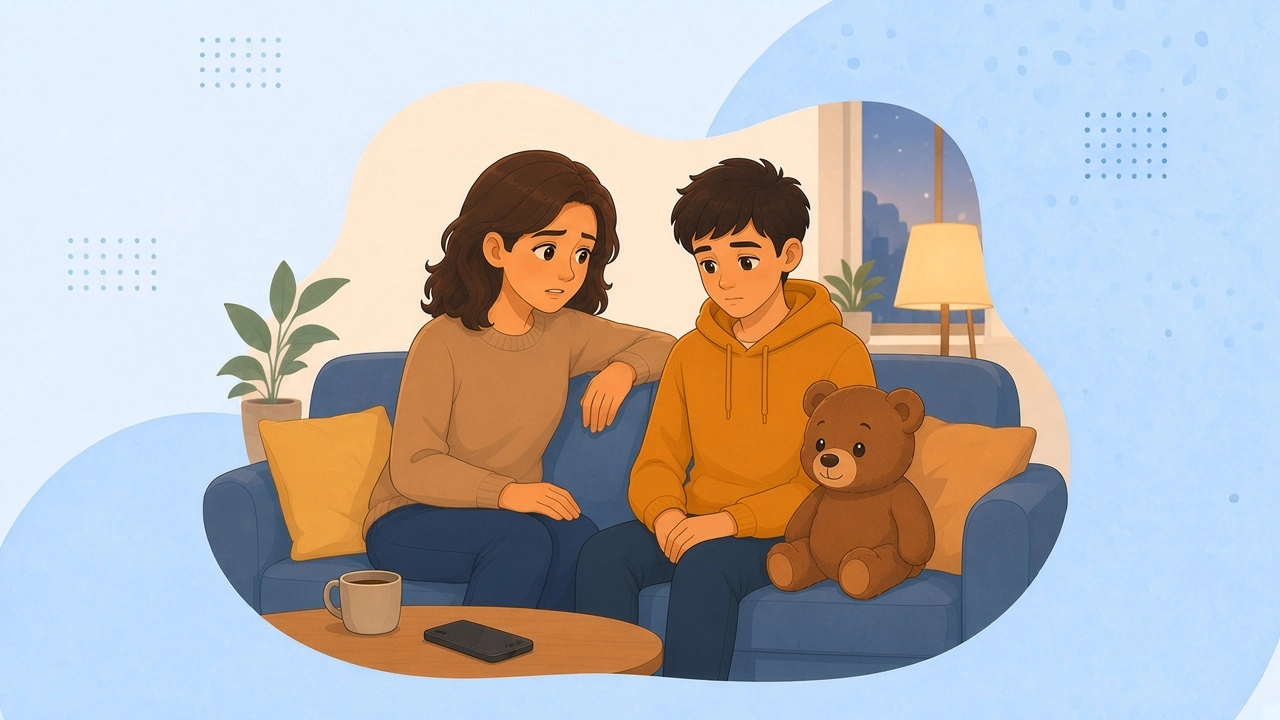
TalkThe no-blame conversation
Shame is what offenders feed on, and fear of getting in trouble is what keeps teens silent. So the first thing to say is the reassurance.
If something has already happened, you can say: “Thank you for telling me. You are not in trouble with me, and I am not angry. The person doing this is the one in the wrong. We will sort it out together, and we will do it step by step.”
If you want to talk before anything happens, try: “Some people online pretend to be teens and try to trick young people into sending photos, then threaten them. It happens to smart, careful kids. If it ever does, tell me straight away. I will help, and you will not be in trouble with me.”
Then listen. Avoid “How could you…?” and “Why did you…?”. Ask “What do you need from me right now?” NCMEC’s interactive experience No Escape Room and its parent discussion guide can help you start, by exploring the choices a teen faces.
PreventionLowering the risk
You cannot remove all risk, but you can make it harder for a stranger to reach your teen. The FBI’s advice for young people is a good base:
- Keep accounts private and be selective about what is public, because open accounts tell strangers a lot.
- Limit who can message them. Turn off or filter direct messages from people they do not know, and ignore unknown friend or follow requests.
- Be wary of anyone first met online. Treat a request to move to a different app or private video chat as a warning sign.
- Remember that images can be stolen or faked, so a photo does not prove who someone is.
- Agree what to do if someone asks for photos or money: stop, block, tell you.
- Keep app installs under your control so new messaging apps do not appear without you knowing. Our guide to blocking app installs on Android shows the options.
For an app-specific guide, see Snapchat parental controls and teen sexting on Snapchat.
For parentsWhere SafeLagoon can help
Software cannot stop sextortion, and it should not replace the conversations above. It can help you set clear boundaries on your teen’s phone.
SafeLagoon’s controls on the child’s phone are for Android. You can turn apps off on a schedule, for example overnight, set time limits, or block an app completely. Tell your teen what is switched on and why. Controls work best when they are not a secret.
QuestionsFAQ
What is sextortion?
Sextortion is blackmail using intimate images, or the claim that the offender has them. The offender threatens to share the images unless the young person pays or sends more. Teen boys are the most common targets in recent cases, but it can happen to anyone.
What should I do if my teen is being blackmailed?
Do not pay, stop replying, block and report the account, and do not delete the chat or accounts. Keep the phone as it is, write down usernames and threats, and avoid copying, forwarding or posting any explicit image. Report it to the police or a hotline. Tell your teen clearly that they are not in trouble with you.
Will paying make it stop?
No. The FBI warns that paying does not guarantee the offender will not release the material, and NCMEC says paying rarely stops the blackmail. Demands often come back.
Can the images be removed?
Often, yes. Take It Down (NCMEC) covers images or videos taken before the person turned 18, and Report Remove (Childline and IWF) helps UK under-18s. They work with participating platforms and cannot remove everything, so also report to the app and the authorities.
How can I tell if my teen has been targeted?
Look for changes: mood swings after using the phone, secrecy, sleep or school problems, or unexplained requests for money or gift cards. Ask calmly and say first that they will not be in trouble with you.
This article is general information, not medical or legal advice. Rules differ by country. Third-party names are trademarks of their owners; no affiliation or endorsement is implied.

Writes for the Safe Lagoon blog · More articles on the blog